
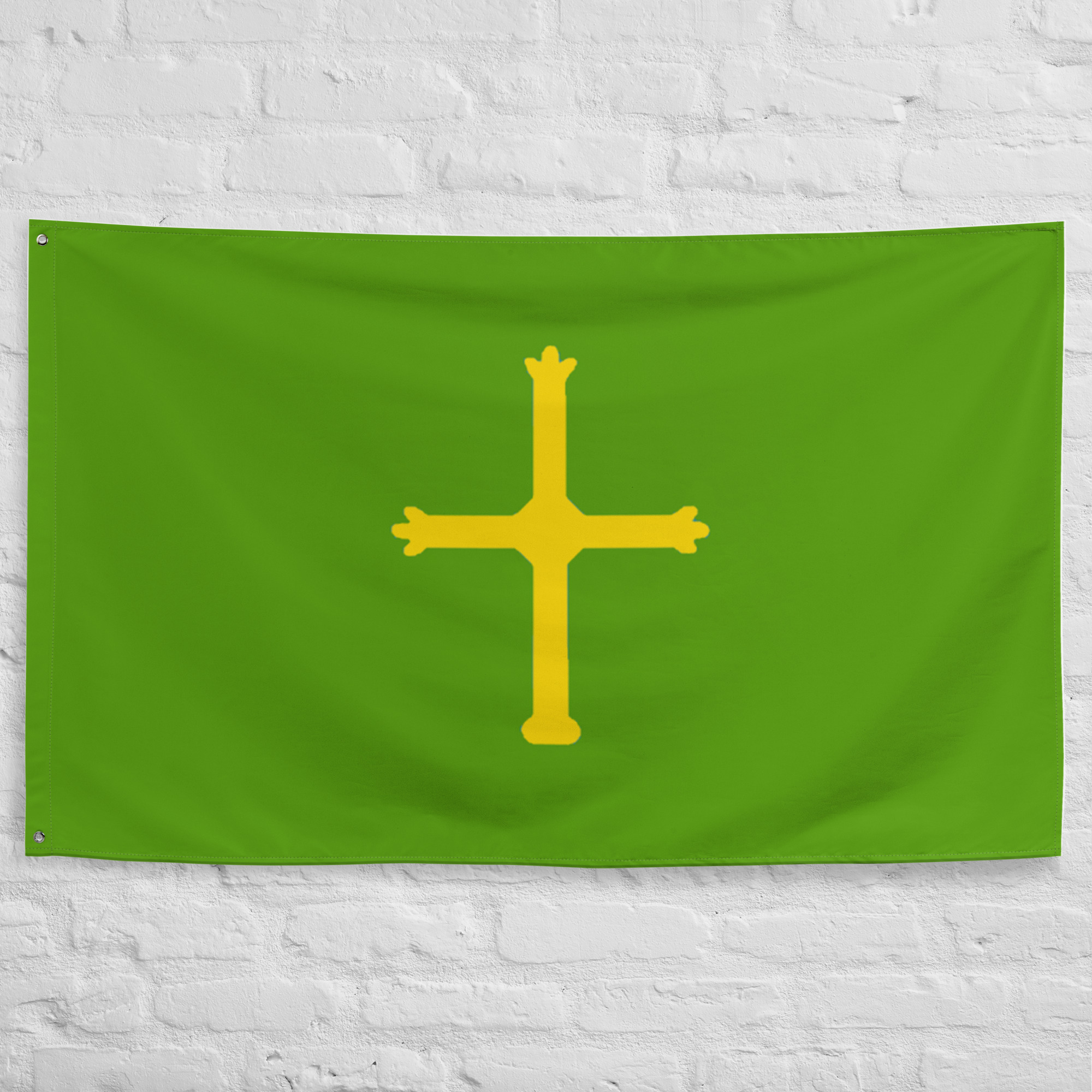
Visigoth Flag Symbol of a Powerful Germanic Kingdom
The Visigoth Flag represents one of the most influential kingdoms of the Early Middle Ages. Associated with the Visigoths, a Germanic people who established a powerful realm in Hispania following the decline of the Western Roman Empire, this historic banner symbolizes military strength, cultural transformation, and the foundations of medieval Spain. Featuring a golden cross on a green field, the design reflects the Christian identity that became central to the Visigothic Kingdom during its later centuries. Today, the flag serves as a tribute to a civilization that helped shape the history of Europe and the Iberian Peninsula.
The Origins of the Visigoths
The Visigoths were one of the major Gothic peoples who emerged during the Migration Period. Originally living in Eastern Europe, they gradually moved westward as political and military pressures transformed the ancient world. Their migrations brought them into direct contact with the Roman Empire and eventually into the heart of Western Europe.
The Meaning Behind the Visigoth Flag
The Visigoth Banner symbolizes the legacy of a kingdom that bridged the transition between the Roman world and medieval Europe. The cross reflects the importance of Christianity within Visigothic society, while the simple design evokes the banners and standards associated with early medieval kingdoms.
The Sack of Rome
One of the most famous events associated with the Visigoths occurred in 410 AD when King Alaric led his forces into Rome. This event shocked the ancient world and demonstrated the declining power of the Western Roman Empire. Although the Visigoths initially sought accommodation within the empire, their relationship with Rome was often marked by conflict.
The Kingdom of Toulouse
The Kingdom of the Visigoths Flag recalls the first major Visigothic state established in southern Gaul. Centered around Toulouse, this kingdom became one of the most powerful successor states to emerge after the weakening of Roman authority in Western Europe.
The Move to Hispania
Following military defeats against the Franks, the Visigoths shifted their political center southward into Hispania. There they established a durable kingdom that controlled most of the Iberian Peninsula for centuries and became a major force in regional politics.
The Conversion to Christianity
The Visigoth Kingdom Flag reflects a kingdom whose identity became closely linked to Christianity. Initially followers of Arian Christianity, the Visigoths later converted to Catholic Christianity under King Reccared I, an event that helped unify the kingdom’s population.
The Capital at Toledo
Toledo became the political and religious center of the Visigothic Kingdom. From this important city, kings governed their territories, organized councils, and established laws that influenced later Spanish institutions.
Visigothic Law and Government
The Visigoths developed one of the most sophisticated legal systems of the early medieval period. Their legal code combined Germanic traditions with Roman legal principles, creating a framework that influenced future generations.
Culture and Architecture
The Gothic History Flag represents a civilization that left behind churches, manuscripts, artistic traditions, and architectural achievements. Elements of Visigothic culture survived long after the kingdom itself disappeared.
The Muslim Conquest of Hispania
In 711 AD, Muslim forces crossed into the Iberian Peninsula and defeated the Visigothic army at the Battle of Guadalete. This event marked the beginning of a dramatic transformation in Iberian history and led to the collapse of the Visigothic Kingdom.
The Legacy of the Visigoths
Although their kingdom fell, the Visigoths left a lasting impact on Spanish identity, law, religion, and political traditions. Medieval Christian kingdoms often viewed themselves as heirs to the Visigothic state.
Why Collectors Appreciate the Visigoth Flag
Collectors value the Visigoth Flag because it represents a pivotal period in European history. The banner appeals to enthusiasts of medieval history, Germanic tribes, the Roman Empire, and the origins of Spain.
The Visigoths and Medieval Spain
The Visigothic Kingdom served as an important bridge between antiquity and the medieval world. Its institutions, culture, and religious traditions helped lay the foundations for later Spanish kingdoms.
Educational and Historical Importance
The Visigoth Banner provides an excellent opportunity to explore the Migration Period, the fall of the Western Roman Empire, early medieval Europe, and the development of the Iberian Peninsula. It serves as a reminder of a civilization whose influence extended far beyond its own era.
Browse our collection of Historical Flags to discover more banners inspired by ancient kingdoms, empires, tribes, and civilizations from around the world.
Learn more about the Visigoths at Encyclopaedia Britannica.
Product Features
- 100% polyester construction
- Durable knitted fabric
- Printed on one side
- Blank reverse side
- 2 iron grommets for easy display
- Suitable for indoor and outdoor use


Reviews
There are no reviews yet.