
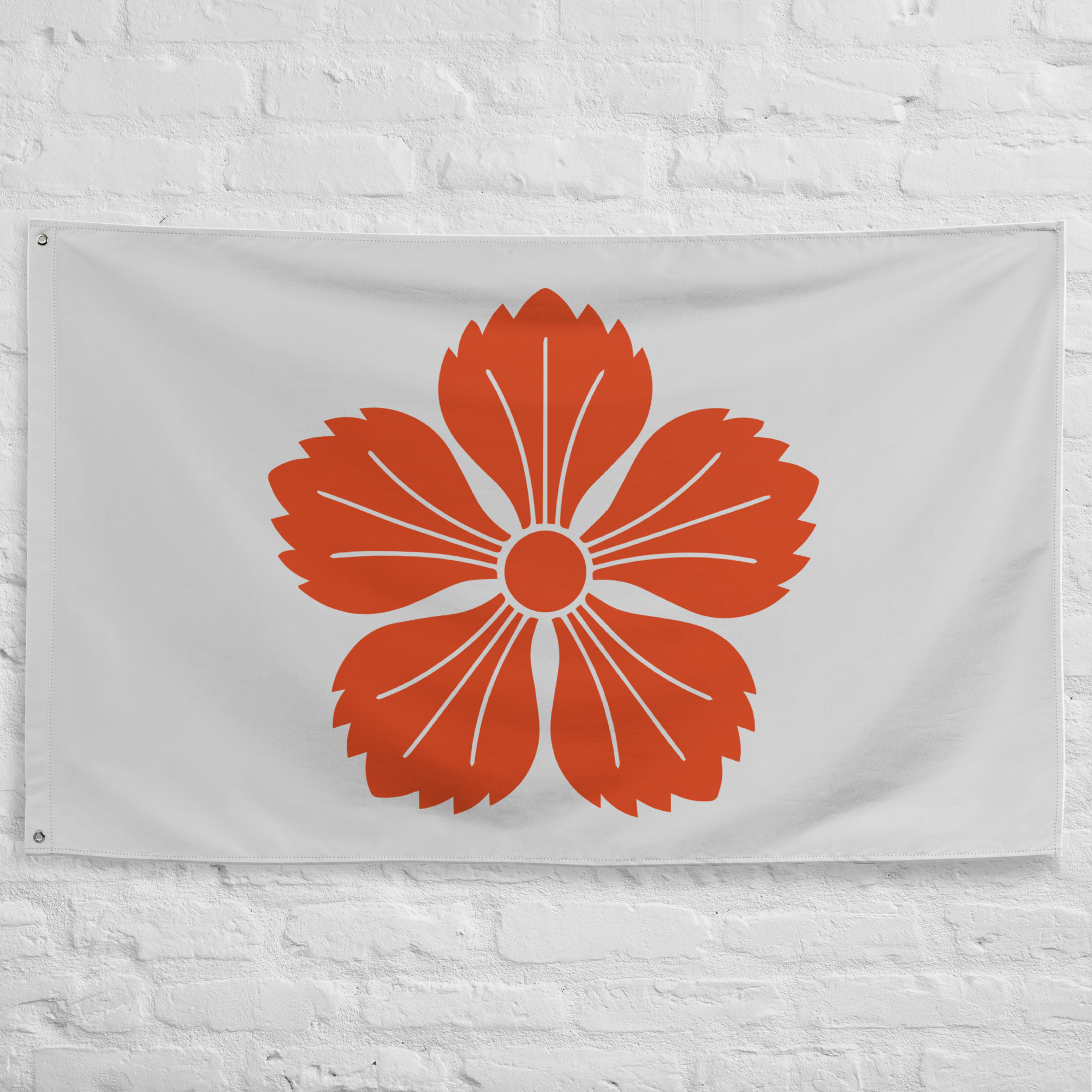
Saito Clan Crest Flag Symbol of Samurai Ambition and Feudal Power
The Saito Clan Crest Flag represents one of the most influential warrior families of Japan’s Sengoku period. Featuring the distinctive floral crest associated with the Saito clan, this historic banner symbolizes military strength, political ambition, and the turbulent era of feudal warfare that shaped Japanese history. The Saito clan became famous for its control of Mino Province and its role in the struggles that ultimately led to the unification of Japan. Today, the flag serves as a powerful reminder of samurai culture and the legacy of one of the most formidable clans of the sixteenth century.
The Origins of the Saito Clan
The Saito clan rose to prominence during a period when regional warlords competed for territory and influence throughout Japan. Although the family had earlier roots, it was during the Sengoku era that the clan emerged as a major political and military force. Through strategic leadership and military success, the Saito established control over important territories and became one of the dominant powers in central Japan.
The Meaning Behind the Saito Clan Crest Flag
The Saito Clan Mon displayed on this banner served as the official symbol of the clan. Like other Japanese family crests, it functioned as a visual identifier used on armor, banners, clothing, and official documents. The elegant floral design reflects the artistic traditions of Japanese heraldry while representing the prestige and authority of the Saito family.
The Tradition of Japanese Mon
The Saito Family Crest Flag belongs to a centuries old tradition of Japanese heraldry. Known as mon, these symbols were used by noble families, samurai clans, and daimyo to distinguish themselves from rivals. During military campaigns, crests helped warriors identify allies and maintain organization on the battlefield.
Saito Dosan and the Rise of the Clan
The history of the Saito clan is closely linked to Saito Dosan, one of the most remarkable figures of the Sengoku period. Often called the “Viper of Mino,” Dosan rose from relatively modest origins to become the ruler of Mino Province. Through intelligence, political maneuvering, and military skill, he transformed the Saito clan into a major regional power.
The Strategic Importance of Mino Province
The Japanese Clan Flag represents a family that controlled one of the most strategically important regions in Japan. Located between eastern and western Japan, Mino Province occupied a key position for trade, military movement, and political influence. Control of this territory made the Saito clan a significant force in national affairs.
The Saito Clan and Oda Nobunaga
One of the most famous chapters in the clan’s history involves its relationship with Oda Nobunaga. Initially connected through marriage alliances, tensions eventually led to conflict between the two families. The struggle between the Saito and Oda clans became a pivotal moment in the rise of Nobunaga and the broader process of Japanese unification.
The Fall of the Saito Clan
Despite its strength, the Saito clan faced growing internal divisions and external threats. After a series of conflicts, Oda Nobunaga successfully conquered Mino Province in 1567. The fall of the Saito marked the end of the clan’s dominance but also paved the way for Nobunaga’s expansion across Japan.
Samurai Values and Clan Identity
The Samurai Clan Flag reflects values commonly associated with the warrior class, including loyalty, courage, discipline, and leadership. Although the Saito clan ultimately lost its independence, its members played an important role in the military and political history of feudal Japan.
Why Collectors Appreciate the Saito Clan Crest Flag
Collectors and enthusiasts of Japanese history value the Saito Clan Crest Flag because of its connection to one of the most dramatic periods in Japanese history. The clan’s rivalry with Oda Nobunaga, its control of Mino Province, and the legendary reputation of Saito Dosan make this banner especially appealing to fans of samurai culture.
The Legacy of the Saito Clan
The legacy of the Saito family continues through historical records, castles, literature, and modern studies of the Sengoku era. Their story reflects the intense competition, ambition, and military innovation that characterized feudal Japan. The clan’s crest remains a recognizable symbol of this fascinating period.
Educational Value and Historical Importance
The Saito Clan Mon serves as an excellent educational resource for exploring Japanese heraldry, samurai warfare, and the political struggles of the Sengoku period. It offers insight into the rise and fall of powerful clans that helped shape the course of Japanese history.
Browse our collection of Historical Flags to discover more banners inspired by legendary samurai clans, kingdoms, empires, and historical movements.
Learn more about the Sengoku period through Encyclopaedia Britannica: History of the Sengoku Period.
Product Features
- 100% polyester construction
- Durable knitted fabric
- Printed on one side
- Blank reverse side
- 2 iron grommets for easy display
- Suitable for indoor and outdoor use




Reviews
There are no reviews yet.