
Republic of Central Lithuania Flag Symbol of a Unique Interwar State
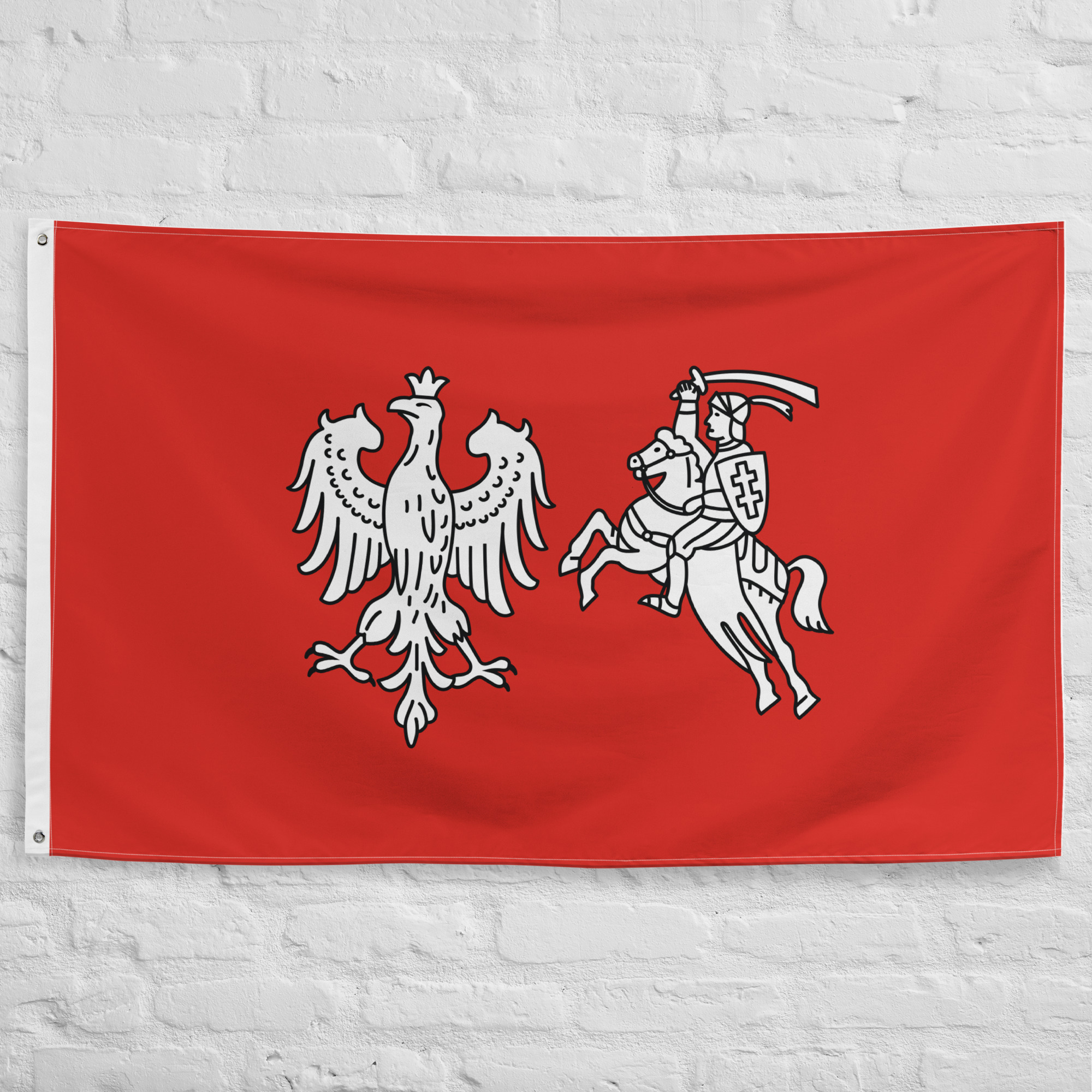
The Republic of Central Lithuania Flag represents one of the most fascinating and short-lived states of post-World War I Europe. Established in 1920 around the city of Vilnius, the Republic of Central Lithuania existed during a period of political uncertainty and territorial disputes following the collapse of several empires. Featuring the White Eagle of Poland alongside the mounted knight known as Vytis, one of Lithuania’s most enduring national symbols, the flag reflects the complex cultural and historical ties that shaped the region. Today, this banner serves as a reminder of an important chapter in the history of Eastern Europe.
The Origins of the Republic of Central Lithuania
The Republic of Central Lithuania emerged in October 1920 following military and political developments in the Vilnius region. After World War I, newly independent Poland and Lithuania both claimed the historic city of Vilnius and surrounding territories. These competing claims created tensions that eventually led to the creation of a separate political entity.
The Meaning Behind the Republic of Central Lithuania Flag
The Central Lithuania Flag combines two powerful historical symbols. The White Eagle represents Poland and its centuries-old state tradition, while the mounted knight known as Vytis represents Lithuania and its medieval heritage. Together, these emblems symbolize the intertwined history of both nations.
The Importance of Vilnius
The Historical Lithuania Flag is closely connected to Vilnius, one of the most historically significant cities in Eastern Europe. For centuries, Vilnius served as the capital of the Grand Duchy of Lithuania and became an important cultural, political, and economic center.
The Legacy of the Polish-Lithuanian Commonwealth
The symbols displayed on the flag reflect the legacy of the Polish-Lithuanian Commonwealth, one of the largest and most influential states in European history. For centuries, Poland and Lithuania shared political institutions while maintaining distinct cultural identities.
Post-World War I Europe
The Republic of Central Lithuania Banner emerged during a time when national borders across Europe were being redrawn. The collapse of the Russian, German, Austro-Hungarian, and Ottoman Empires created new opportunities and challenges for emerging states.
The Creation of Central Lithuania
The Republic of Central Lithuania was established after General Lucjan Żeligowski led forces into the Vilnius region. The new state was presented as an independent republic, although its relationship with Poland remained a subject of historical debate and international attention.
The Population of the Region
The territory of Central Lithuania was home to a diverse population that included Poles, Lithuanians, Belarusians, Jews, and other communities. This cultural diversity contributed to the complexity of political developments in the region.
The Vytis Symbol
The mounted knight featured on the Vilnius Region Flag is known as Vytis and remains one of Lithuania’s most recognizable national symbols. Its origins date back to the medieval Grand Duchy of Lithuania and it continues to be used in Lithuanian heraldry today.
The White Eagle of Poland
The White Eagle has served as a symbol of Poland for centuries. Appearing on royal standards, coats of arms, and national emblems, it represents the continuity of Polish statehood and national identity throughout history.
The End of the Republic
The Republic of Central Lithuania existed for only a short period. In 1922, following elections and political decisions, the territory was incorporated into Poland. This outcome remained controversial and influenced Polish-Lithuanian relations for many years.
Historical Significance
The Republic of Central Lithuania Flag represents an important example of the political challenges that emerged in Europe following World War I. Its history reflects broader themes of national identity, territorial disputes, and state formation during the interwar period.
Why Collectors Appreciate the Republic of Central Lithuania Flag
Collectors value this banner because it represents a rarely remembered state with a unique place in European history. The combination of Polish and Lithuanian symbols creates a distinctive design that stands apart from many other historical flags.
Educational and Historical Value
The flag offers an excellent opportunity to explore Eastern European history, the aftermath of World War I, the history of Vilnius, and the complex relationship between Poland and Lithuania during the twentieth century.
Browse our collection of Historical Flags to discover more banners inspired by kingdoms, republics, empires, and historical states from around the world.
Learn more about the Republic of Central Lithuania at Encyclopaedia Britannica.
Product Features
- 100% polyester construction
- Durable knitted fabric
- Printed on one side
- Blank reverse side
- 2 iron grommets for easy display
- Suitable for indoor and outdoor use






Reviews
There are no reviews yet.