
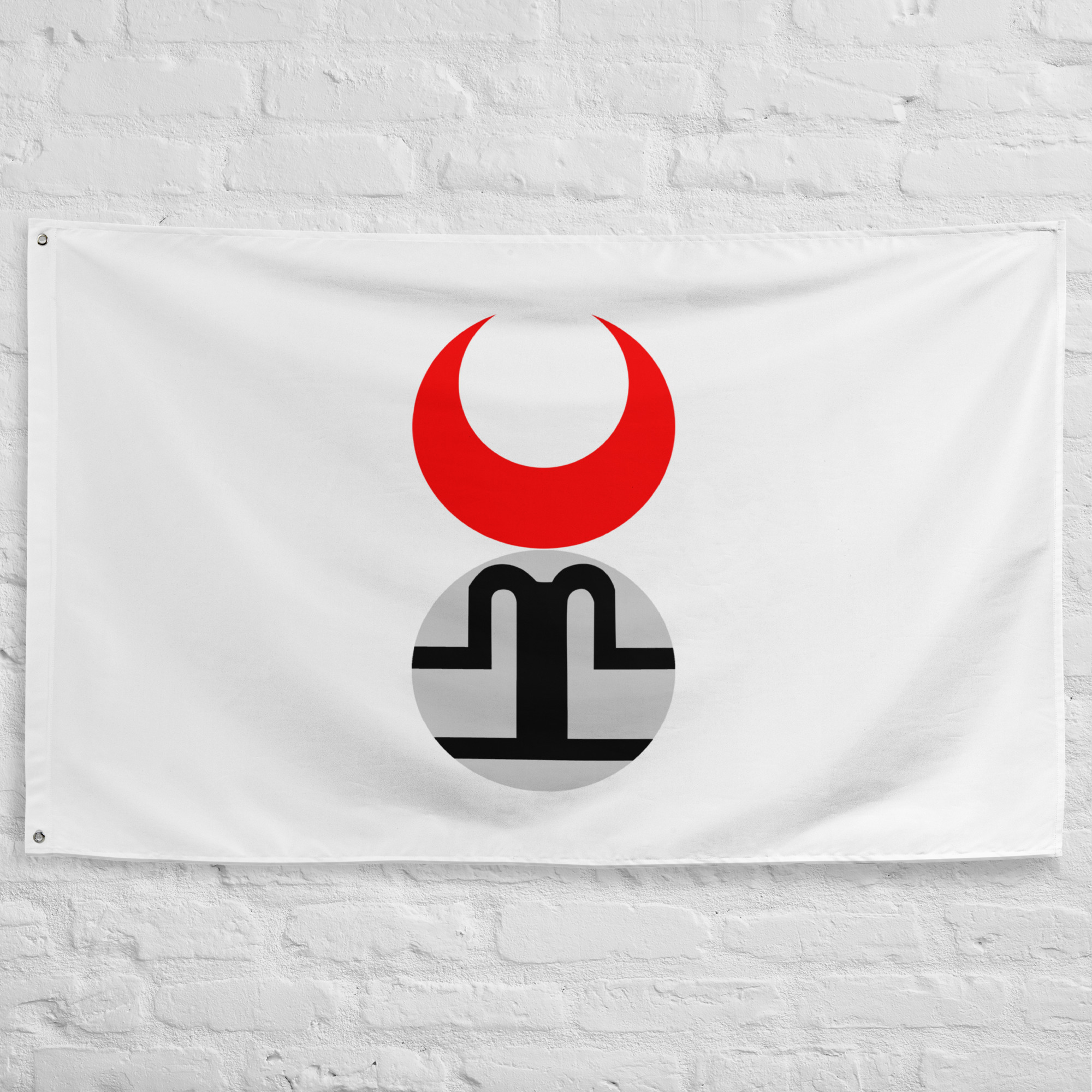
Nogai Horde Flag Symbol of a Powerful Steppe Confederation
The Nogai Horde Flag represents one of the most influential nomadic powers to emerge following the decline of the Golden Horde. Named after the famous Mongol commander Nogai Khan, the Nogai Horde controlled vast territories across the Eurasian steppe and played a major role in the political history of Eastern Europe, Central Asia, and the Black Sea region. Featuring symbols associated with Turkic and steppe traditions, this banner reflects the heritage of a people whose horsemen dominated trade routes, influenced regional politics, and maintained a unique nomadic culture for centuries.
The Origins of the Nogai Horde
The Nogai Horde emerged during the fifteenth century as the Golden Horde fragmented into several successor states. Although the Mongol Empire had once controlled enormous territories stretching across Eurasia, internal divisions eventually led to the rise of independent khanates and tribal confederations.
The Meaning Behind the Nogai Horde Flag
The Nogai Horde Banner symbolizes the independence, military strength, and cultural identity of the Nogai people. The design reflects traditions associated with Turkic steppe societies and the legacy of the Golden Horde.
The Legacy of Nogai Khan
The horde derived its name from Nogai Khan, one of the most influential military leaders of the late Mongol period. Although he never officially became Great Khan, his political influence extended across large portions of the western Mongol world and left a lasting impact on the region.
The Golden Horde Connection
The Golden Horde Flag heritage remained central to Nogai identity. The Nogai Horde inherited many political, military, and cultural traditions from the Golden Horde and considered itself part of that broader historical legacy.
Life on the Eurasian Steppe
The Nogai people lived primarily as nomadic pastoralists. Their society revolved around horse breeding, livestock management, seasonal migrations, and trade. Mobility allowed them to thrive across the vast grasslands stretching between the Volga River and the Black Sea.
The Nogai Tatars
The Nogai Tatars Flag reflects the heritage of a Turkic-speaking people whose descendants continue to preserve elements of their culture today. Language, folklore, music, and traditional customs remain important aspects of Nogai identity.
Military Power and Cavalry Warfare
The Nogai Horde became famous for its skilled cavalry. Mounted warriors could travel great distances quickly, making the horde a formidable military force. Their mobility allowed them to influence conflicts involving Russia, Crimea, Kazakhstan, and neighboring powers.
Relations with the Crimean Khanate
The Steppe Horde Flag represents a state that maintained close ties with the Crimean Khanate. Alliances, trade agreements, and military cooperation often linked these two important powers of the Eurasian steppe.
Trade Across Eurasia
The Nogai Horde occupied a strategic position along major trade routes connecting Europe and Asia. Merchants traveling through the region exchanged goods, technologies, and ideas that contributed to economic activity across the steppe.
Conflict and Regional Influence
Throughout its history, the Nogai Horde interacted with powerful neighbors including Muscovy, the Ottoman Empire, the Crimean Khanate, and various Central Asian states. These relationships shaped the political landscape of the region for centuries.
The Decline of the Nogai Horde
Over time, changing military technologies, territorial expansion by neighboring states, and internal divisions weakened the horde. By the eighteenth century, much of its former territory had been absorbed by expanding regional powers.
The Legacy of the Nogai People
Although the Nogai Horde disappeared as an independent political entity, the cultural legacy of the Nogai people survived. Descendant communities continue to live throughout parts of Russia and neighboring regions, preserving aspects of their historical heritage.
Why Collectors Appreciate the Nogai Horde Flag
Collectors value the Nogai Horde Flag because it represents a lesser-known but historically significant steppe power. The banner appeals to enthusiasts of Mongol history, Turkic cultures, nomadic societies, and medieval Eurasian politics.
Educational and Historical Importance
The flag offers an excellent opportunity to explore the history of the Golden Horde, the Eurasian steppe, nomadic civilizations, and the interactions between Europe and Asia during the medieval and early modern periods.
Browse our collection of Historical Flags to discover more banners inspired by khanates, empires, kingdoms, republics, and historic civilizations from around the world.
Learn more about the Nogai Horde at Encyclopaedia Britannica.
Product Features
- 100% polyester construction
- Durable knitted fabric
- Printed on one side
- Blank reverse side
- 2 iron grommets for easy display
- Suitable for indoor and outdoor use



Reviews
There are no reviews yet.