
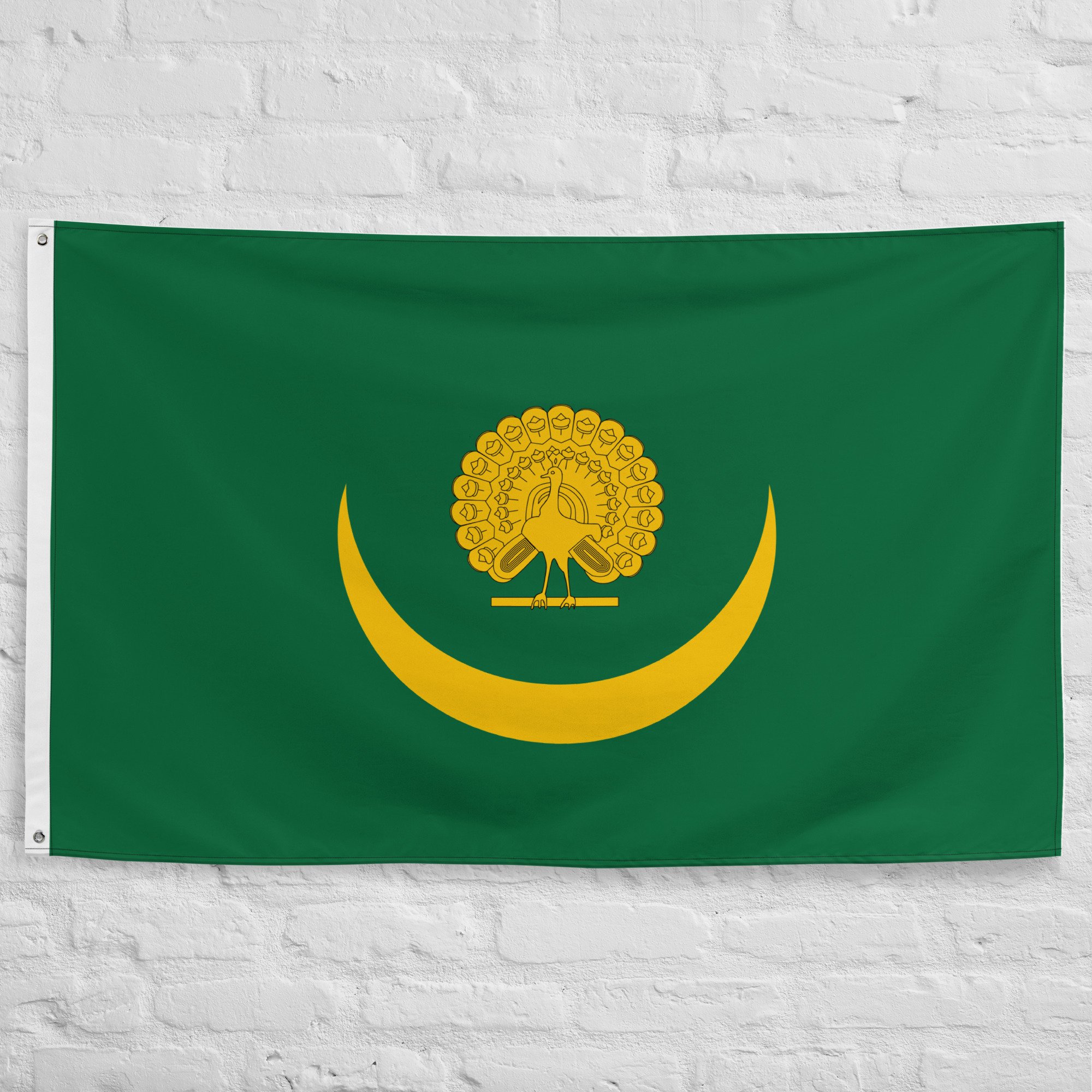
Mughal Empire Flag Symbol of Imperial Power and South Asian Heritage
The Mughal Empire Flag represents one of the most powerful and influential empires in world history. Featuring the iconic green field, golden crescent, and stylized lion and sun motif associated with Mughal authority, this historic banner symbolizes imperial strength, prosperity, military success, and cultural achievement. The Mughal Empire ruled much of the Indian subcontinent for over three centuries, shaping the political, artistic, architectural, and cultural development of South Asia. Today, the flag remains a fascinating symbol for historians, collectors, and enthusiasts of world history.
The Origins of the Mughal Empire
The Mughal Empire was founded in 1526 by Babur, a descendant of both Timur and Genghis Khan. Following his victory at the First Battle of Panipat, Babur established a dynasty that would become one of the wealthiest and most sophisticated empires of the early modern world. His successors expanded Mughal rule across much of the Indian subcontinent.
The Meaning Behind the Mughal Empire Flag
The Mughal Banner incorporates symbols traditionally associated with royalty, sovereignty, and divine authority. The crescent represented prosperity and imperial legitimacy, while the decorative emblem reflected the grandeur and prestige of the Mughal court. Together, these elements created a banner worthy of one of history’s greatest empires.
The Rise of Mughal Power
The Imperial Mughal Flag became increasingly prominent as the empire expanded under rulers such as Akbar the Great. Through military victories, administrative reforms, and diplomatic alliances, the Mughals transformed a regional kingdom into a vast imperial state that stretched across much of South Asia.
Akbar and the Golden Age of the Empire
Akbar is widely regarded as one of the greatest rulers in world history. Under his leadership, the Mughal Empire achieved remarkable political stability and economic growth. His policies encouraged cooperation among diverse religious and cultural communities, helping create a prosperous and unified empire.
The Mughal Dynasty and Cultural Achievement
The Mughal Dynasty Flag represents an empire renowned for its extraordinary cultural accomplishments. Mughal rulers sponsored architecture, literature, painting, music, and scholarship on an unprecedented scale. Their artistic legacy continues to influence South Asian culture today.
The Construction of the Taj Mahal
One of the most famous achievements of the Mughal Empire was the construction of the Taj Mahal under Emperor Shah Jahan. This architectural masterpiece remains one of the most recognizable landmarks in the world and serves as a lasting symbol of Mughal artistic excellence.
Military Strength and Administration
The Mughal Empire maintained one of the largest and most effective military forces of its era. Combined with a sophisticated administrative system, this military power allowed the empire to govern vast territories and maintain stability across diverse populations and regions.
The Mughal Empire and Global Trade
The Historical Indian Flag is associated with a period when South Asia became one of the world’s leading economic centers. Mughal cities flourished through international trade, attracting merchants from Europe, the Middle East, Central Asia, and East Asia. This economic prosperity contributed significantly to the empire’s success.
The Decline of the Mughal Empire
Although the Mughal Empire remained influential for centuries, internal conflicts, regional challenges, and foreign intervention gradually weakened imperial authority. By the nineteenth century, Mughal power had largely faded, bringing an end to one of history’s most remarkable dynasties.
Why Collectors Appreciate the Mughal Empire Flag
Collectors value the Mughal Empire Flag because it represents one of the most important empires in world history. Its distinctive design and association with powerful rulers, magnificent architecture, and cultural achievements make it a popular choice among enthusiasts of historical flags and global heritage.
The Legacy of the Mughal Empire
The influence of the Mughal Empire continues to be felt throughout South Asia. Its contributions to architecture, governance, language, cuisine, and art remain deeply embedded in the region’s cultural identity. The Mughal Empire Flag stands as a symbol of this extraordinary historical legacy.
Educational Value and Historical Importance
The Mughal Banner serves as an excellent educational resource for exploring imperial history, South Asian civilization, and one of the most influential dynasties of the early modern era. It provides valuable insight into the achievements and legacy of the Mughal Empire.
Browse our collection of Historical Flags to discover more banners inspired by empires, kingdoms, dynasties, and civilizations from around the world.
Learn more about the Mughal Empire through Encyclopaedia Britannica: History of the Mughal Dynasty.
Product Features
- 100% polyester construction
- Durable knitted fabric
- Printed on one side
- Blank reverse side
- 2 iron grommets for easy display
- Suitable for indoor and outdoor use



Reviews
There are no reviews yet.