
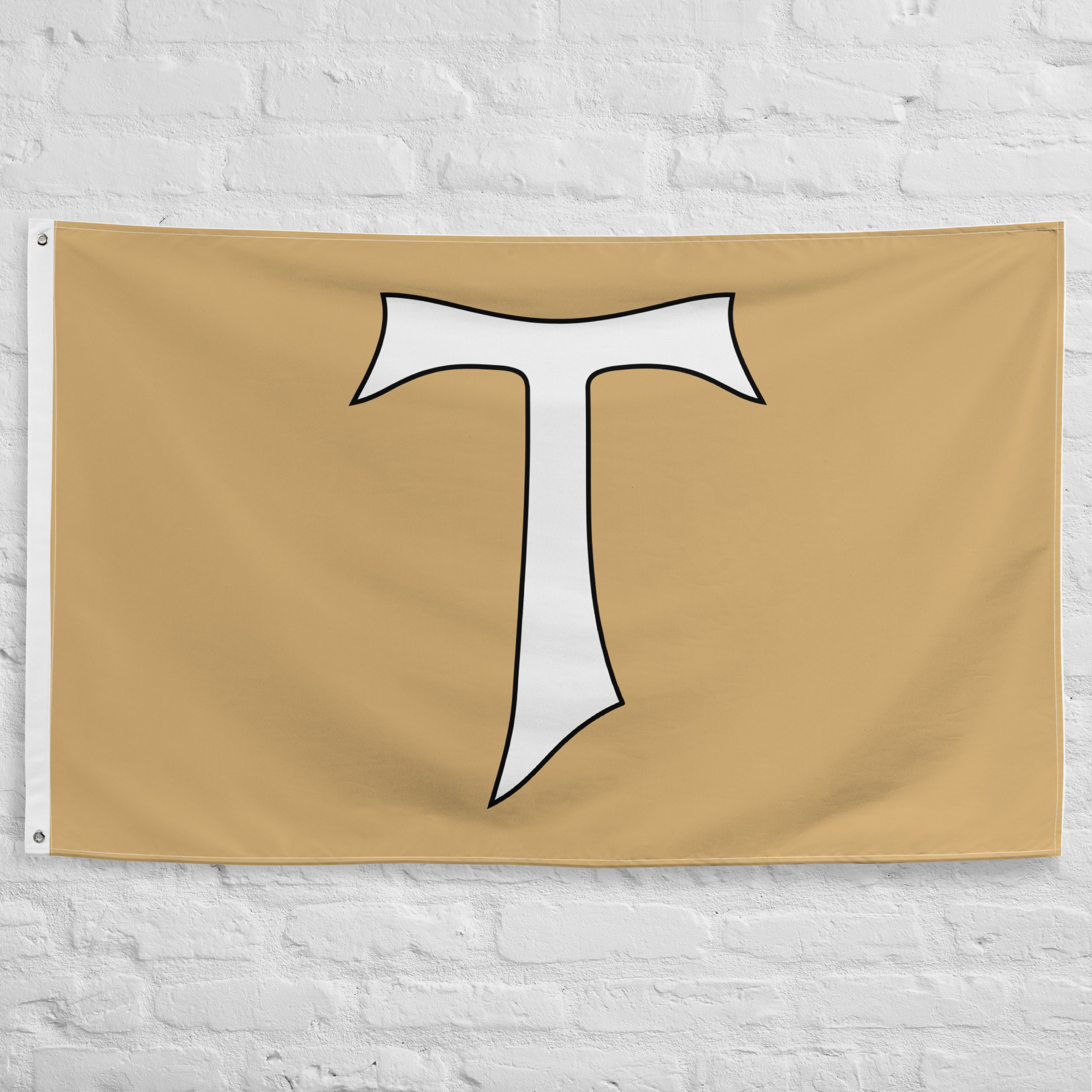
Knights of the Tau Flag Symbol of the Order of Saint James of Altopascio
The Knights of the Tau Flag represents one of the lesser-known yet historically significant religious orders of medieval Europe. Recognized by its distinctive white Tau Cross displayed on a simple field, this banner symbolizes the Order of Saint James of Altopascio, an organization dedicated to assisting pilgrims, caring for the sick, and maintaining important travel routes throughout medieval Christendom. Although often overshadowed by larger military orders such as the Knights Templar and Knights Hospitaller, the Knights of the Tau played an important role in the religious and charitable life of the Middle Ages.
The Origins of the Order
The Order of Saint James of Altopascio was founded in Tuscany, Italy, during the eleventh century. The organization emerged near the important pilgrimage route connecting northern Europe with Rome and other sacred destinations. Its members dedicated themselves to assisting travelers and protecting vulnerable pilgrims.
The Meaning Behind the Tau Cross
The Order of Saint James of Altopascio Flag prominently features the Tau Cross, a symbol with deep Christian significance. The Tau, resembling the letter “T,” was associated with spiritual protection, charity, and devotion.
The Symbolism of the Tau Cross
The Tau Cross Flag reflects ideals of service and compassion. Throughout medieval Christianity, the Tau symbol was often connected with healing, protection, and the care of those in need, making it especially appropriate for a charitable religious order.
Supporting Medieval Pilgrims
The primary mission of the Knights of Altopascio involved assisting pilgrims traveling across Europe. Pilgrimage was an important aspect of medieval religious life, and long journeys often exposed travelers to dangers, illness, and hardship.
Hospitals and Charitable Work
The Medieval Hospitaller Flag represents an order that operated hospitals and shelters for travelers. These institutions provided food, lodging, medical assistance, and spiritual support to thousands of individuals passing through the region.
The Strategic Location of Altopascio
Altopascio occupied a key position along the Via Francigena, one of the most important pilgrimage routes in medieval Europe. This road connected England, France, and other regions with Rome, attracting travelers from across the continent.
The Order’s Expansion
Over time, the Knights of the Tau expanded beyond their original location. Their charitable institutions and properties spread throughout parts of Italy and neighboring regions, increasing their influence and ability to assist pilgrims.
Military and Protective Functions
Although primarily a charitable order, members also helped provide security along dangerous routes. This protective role brought them into the broader tradition of religious organizations that combined spiritual service with practical defense.
Relations with Other Religious Orders
The Knights of Altopascio Banner represents an organization that existed alongside other famous medieval orders including the Knights Hospitaller, Teutonic Knights, and Knights Templar. Each fulfilled different missions while contributing to medieval Christian society.
The Order During the Middle Ages
Throughout the medieval period, the order gained recognition for its dedication to hospitality and care. Pilgrims traveling toward Rome often relied upon institutions operated by the Knights of the Tau.
The Decline of the Order
Changes in political conditions, religious reforms, and shifting travel patterns eventually reduced the influence of the order. Over time, many of its properties and responsibilities were absorbed by other religious institutions.
The Legacy of the Knights of the Tau
The Knights of the Tau Flag preserves the memory of an organization that embodied ideals of charity, service, and protection. Their contributions to medieval healthcare and pilgrimage infrastructure left a lasting mark on European history.
Why Collectors Appreciate the Knights of the Tau Flag
Collectors value this banner because it represents a unique and often overlooked chapter of medieval history. Its simple design and distinctive Tau Cross make it an appealing addition to collections focused on crusading orders and Christian heritage.
Educational and Historical Importance
The flag provides an excellent opportunity to explore medieval pilgrimage, religious orders, healthcare institutions, and the social history of Europe during the Middle Ages. It serves as a reminder that many medieval organizations focused not only on warfare but also on compassion and public service.
Browse our collection of Historical Flags to discover more banners inspired by military orders, crusader states, kingdoms, empires, and medieval civilizations.
Learn more about medieval pilgrimage routes at Encyclopaedia Britannica.
Product Features
- 100% polyester construction
- Durable knitted fabric
- Printed on one side
- Blank reverse side
- 2 iron grommets for easy display
- Suitable for indoor and outdoor use





Reviews
There are no reviews yet.