
Jean Thomas Dulaien Pirate Flag Symbol of Fear and Pirate Legend
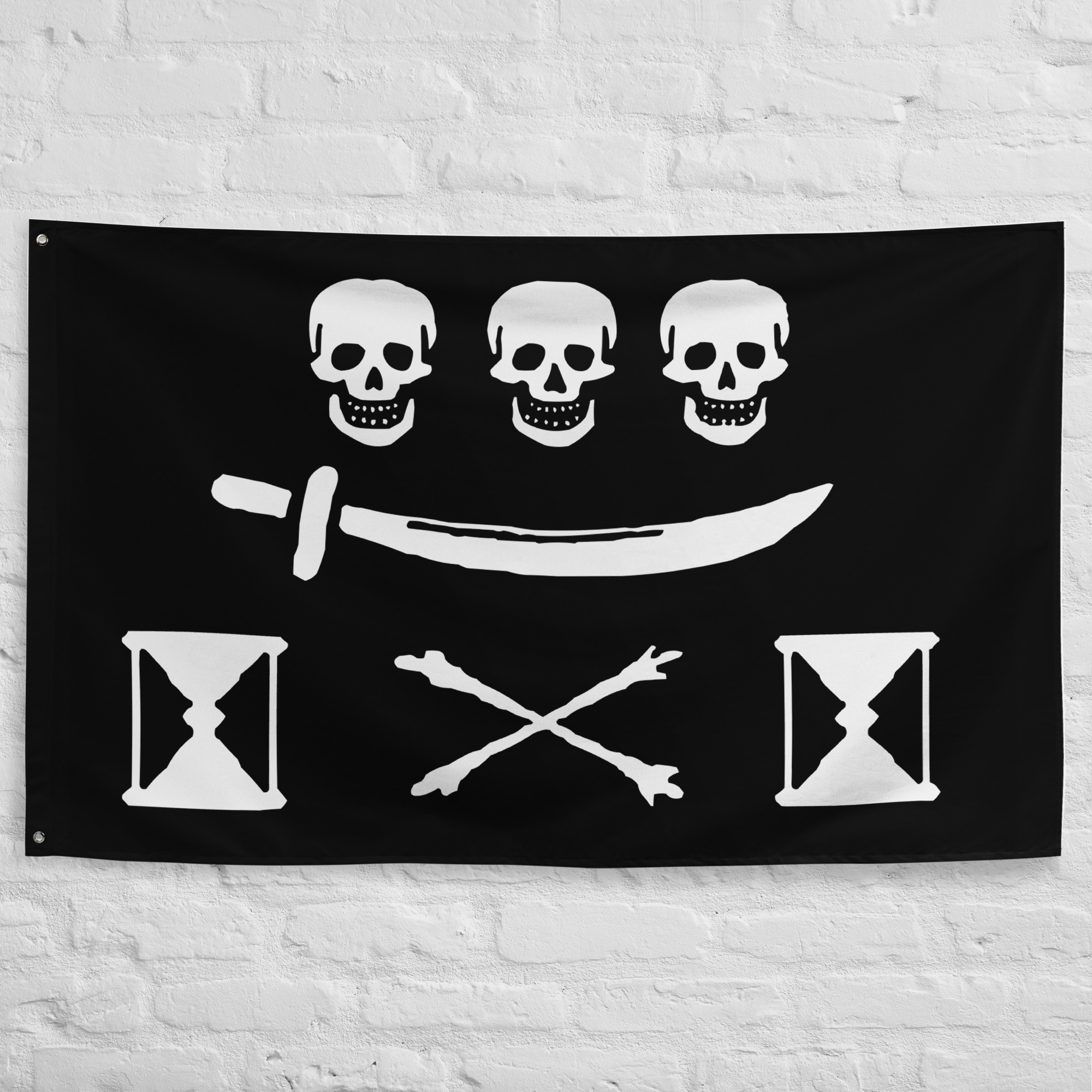
The Jean Thomas Dulaien Pirate Flag is one of the most dramatic examples of pirate symbolism from the Golden Age of Piracy. Featuring three skulls, a curved cutlass, crossed bones, and two hourglasses displayed on a black field, this striking banner embodies the themes of danger, mortality, and intimidation that defined pirate warfare. Designed to spread fear among merchant crews and encourage surrender without resistance, the flag remains a fascinating symbol of maritime history and pirate culture.
The World of the Golden Age of Piracy
The late seventeenth and early eighteenth centuries witnessed the rise of the Golden Age of Piracy. During this period, pirates operated throughout the Caribbean, Atlantic Ocean, Indian Ocean, and along major trade routes. Wealthy merchant ships carrying silver, gold, spices, textiles, and other valuable cargo attracted ambitious sailors willing to risk everything in pursuit of fortune.
The Meaning Behind the Jean Thomas Dulaien Pirate Flag
The Jean Thomas Dulaien Flag combines several classic pirate symbols into a single powerful design. Each element served a specific purpose. Together, they communicated a message of danger and inevitability, reminding sailors that encountering pirates often meant making a difficult choice between surrender and battle.
The Symbolism of the Three Skulls
The three skulls displayed on the Pirate Flag represent mortality and the constant presence of death at sea. Pirate captains frequently used skull imagery because it was instantly understood by sailors across different nations and languages. The skull became one of the most recognizable symbols in maritime history.
The Cutlass as a Symbol of Pirate Strength
The curved sword featured prominently on the banner symbolizes combat, courage, and readiness for action. Pirate crews relied on close quarter fighting during ship boardings, making the cutlass one of their most iconic weapons. The image reinforced the fearsome reputation pirates sought to maintain throughout the world’s oceans.
The Meaning of the Crossed Bones
The Skull and Crossbones Flag tradition became famous because of its simplicity and effectiveness. Crossed bones beneath a skull signified death and danger while warning potential victims of the consequences of resistance. Few symbols in maritime history have achieved the same level of recognition.
The Hourglass and the Passage of Time
The two hourglasses featured on the Historic Pirate Banner carry a particularly powerful message. They suggest that time is running out for those facing pirate attack. Merchant captains often understood that hesitation could lead to violence, making the hourglass one of the most effective psychological tools used in pirate imagery.
Pirate Flags as Psychological Warfare
Long before modern warfare emphasized psychological operations, pirates understood the power of symbolism. A feared banner could convince a merchant crew to surrender without a fight. This strategy reduced casualties, protected pirate crews, and increased the likelihood of capturing valuable cargo intact.
Maritime Trade and Pirate Activity
The rise of global trade created enormous opportunities for pirates. Ships traveled across vast oceans carrying valuable goods between Europe, Africa, Asia, and the Americas. The Jean Thomas Dulaien Pirate Flag represents an era when maritime commerce expanded rapidly and pirate captains sought to profit from these lucrative routes.
Why Collectors Appreciate the Jean Thomas Dulaien Pirate Flag
Collectors value the Jean Thomas Dulaien Pirate Flag because of its visually striking composition and authentic pirate symbolism. The combination of three skulls, crossed bones, hourglasses, and a cutlass creates a dramatic design that immediately evokes the legends of piracy. It is especially popular among enthusiasts of maritime history and historical flags.
The Enduring Legacy of Pirate Symbolism
Pirate banners continue to capture the imagination of people around the world. Their symbols have appeared in literature, films, museums, games, and popular culture for generations. The imagery associated with the Jean Thomas Dulaien Flag remains a powerful reminder of the adventurous and dangerous world of the age of sail.
Educational Value and Historical Importance
The Jean Thomas Dulaien Flag serves as an excellent educational resource for exploring maritime trade, naval warfare, piracy, and the use of symbolism in history. It offers valuable insight into how pirate crews built reputations that often proved as effective as weapons in securing victory.
Browse our collection of Historical Flags to discover more banners inspired by famous pirates, naval powers, kingdoms, and legendary historical figures.
Learn more about the history of piracy through Encyclopaedia Britannica: History of Piracy.
Product Features
- 100% polyester construction
- Durable knitted fabric
- Printed on one side
- Blank reverse side
- 2 iron grommets for easy display
- Suitable for indoor and outdoor use


Reviews
There are no reviews yet.