
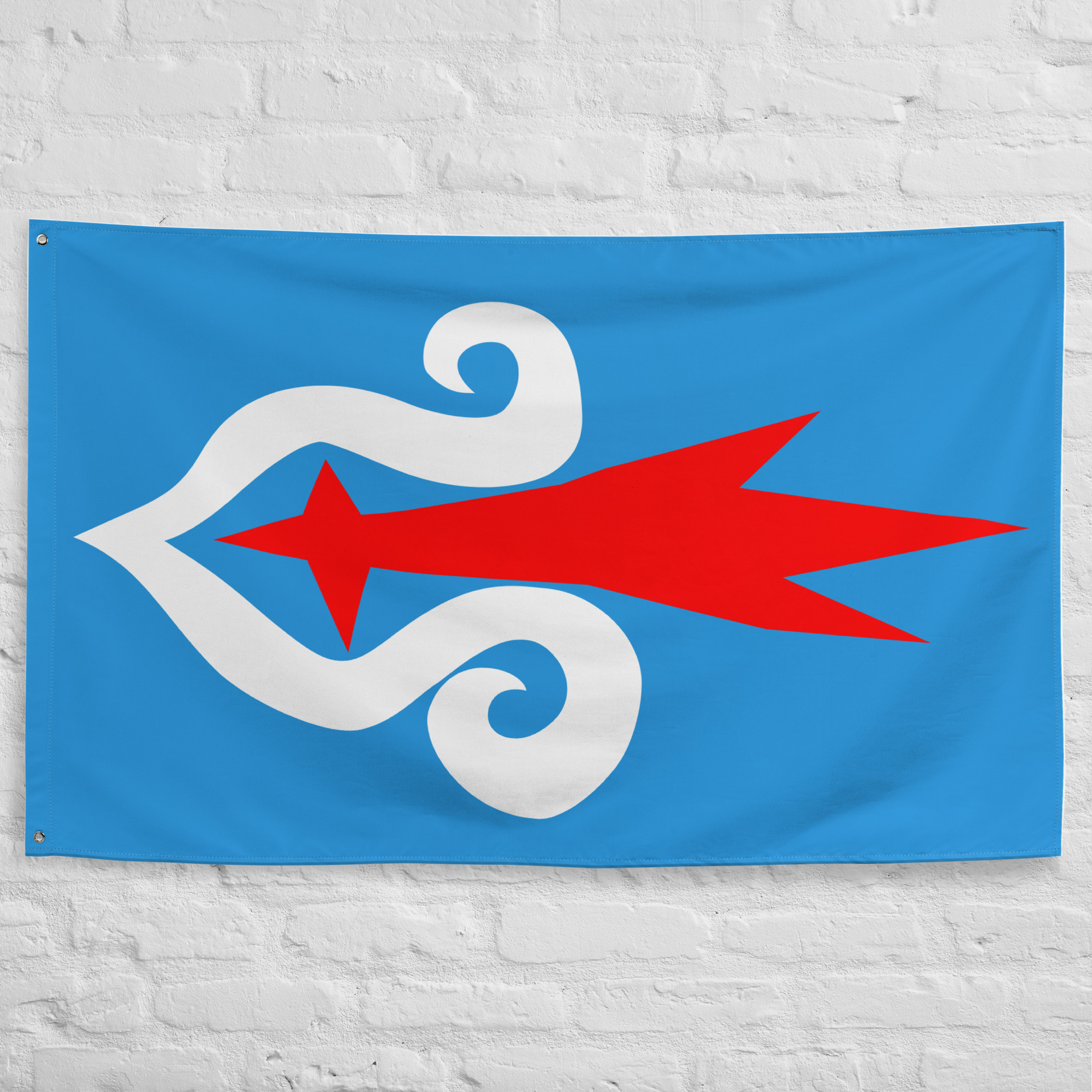
Ainu Flag Symbol of Indigenous Culture and Heritage
The Ainu Flag is a meaningful cultural banner representing the heritage, traditions, and identity of the Ainu people, the Indigenous inhabitants of northern Japan. Featuring a distinctive traditional emblem displayed on a light blue field, this banner reflects the rich history and cultural legacy of one of East Asia’s most unique Indigenous communities. Its elegant design has become a recognized symbol of Ainu identity and cultural pride.
Today, the flag is displayed by cultural organizations, educators, heritage enthusiasts, and individuals seeking to celebrate and preserve Ainu history and traditions.
The Ainu People and Their History
The Ainu Flag represents a people whose history stretches back centuries in the regions now known as Hokkaido, Sakhalin, and the Kuril Islands. The Ainu developed a unique culture, language, spiritual tradition, and way of life distinct from neighboring societies.
For generations, Ainu communities maintained strong connections to nature, fishing, hunting, craftsmanship, and oral storytelling traditions. These customs helped shape a vibrant cultural identity that continues to be respected and celebrated today.
The banner serves as a tribute to this remarkable heritage and enduring cultural legacy.
The Meaning of the Traditional Symbol
The Ainu Culture Flag features a stylized emblem inspired by traditional Ainu artistic motifs. Ainu designs frequently incorporate flowing lines, spirals, and geometric elements that symbolize harmony, protection, continuity, and the connection between humanity and nature.
The red central element creates a strong visual focal point, while the surrounding white forms reflect the artistic traditions found in Ainu textiles, carvings, ceremonial objects, and decorative patterns.
Together, these elements create a banner that is both visually distinctive and culturally meaningful.
A Symbol of Ainu Heritage
The Ainu Heritage Flag honors a culture known for its rich artistic traditions, spiritual practices, music, dance, and craftsmanship. Ainu communities developed distinctive forms of embroidery, wood carving, oral literature, and ceremonial customs that remain important aspects of their identity.
These traditions have been preserved through generations and continue to be shared through cultural centers, educational programs, and heritage initiatives.
The flag serves as a visible expression of pride in this unique cultural heritage.
Indigenous Identity in Japan
The Indigenous Japan Flag represents the recognition and preservation of Indigenous culture within modern Japan. The Ainu people have played an important role in the cultural history of northern Japan and continue to contribute to the country’s diverse cultural landscape.
Efforts to preserve the Ainu language, traditions, and historical knowledge have increased awareness of their heritage both within Japan and internationally.
The banner symbolizes these ongoing efforts to celebrate and maintain cultural identity.
A Banner for Education and Cultural Appreciation
The Ainu People Flag is frequently displayed during cultural festivals, educational exhibits, heritage celebrations, museums, academic programs, and community events. Its historical and cultural significance makes it a valuable addition to displays focused on Indigenous history and cultural diversity.
Collectors often include the banner alongside other Indigenous and cultural flags to highlight the rich variety of traditions found around the world.
Its unique design and cultural importance make it a meaningful display piece.
The Enduring Legacy of the Ainu People
The Ainu Flag celebrates the resilience, creativity, and cultural achievements of the Ainu people. Despite historical challenges, Ainu communities have continued to preserve and share their traditions with future generations.
Whether displayed for educational purposes, cultural appreciation, collecting, heritage celebrations, or personal pride, this banner honors one of Asia’s most distinctive Indigenous cultures and their enduring contribution to human history.
It stands as a symbol of identity, heritage, and cultural continuity.
Browse Our Collection
Browse our collection of Ethnic & Cultural Flags.
For additional information, visit the Ainu People Wikipedia article.
Product Features
- 100% polyester construction
- Durable knitted fabric
- Printed on one side
- Blank reverse side
- 2 iron grommets for easy display
- Suitable for indoor and outdoor use



Reviews
There are no reviews yet.