
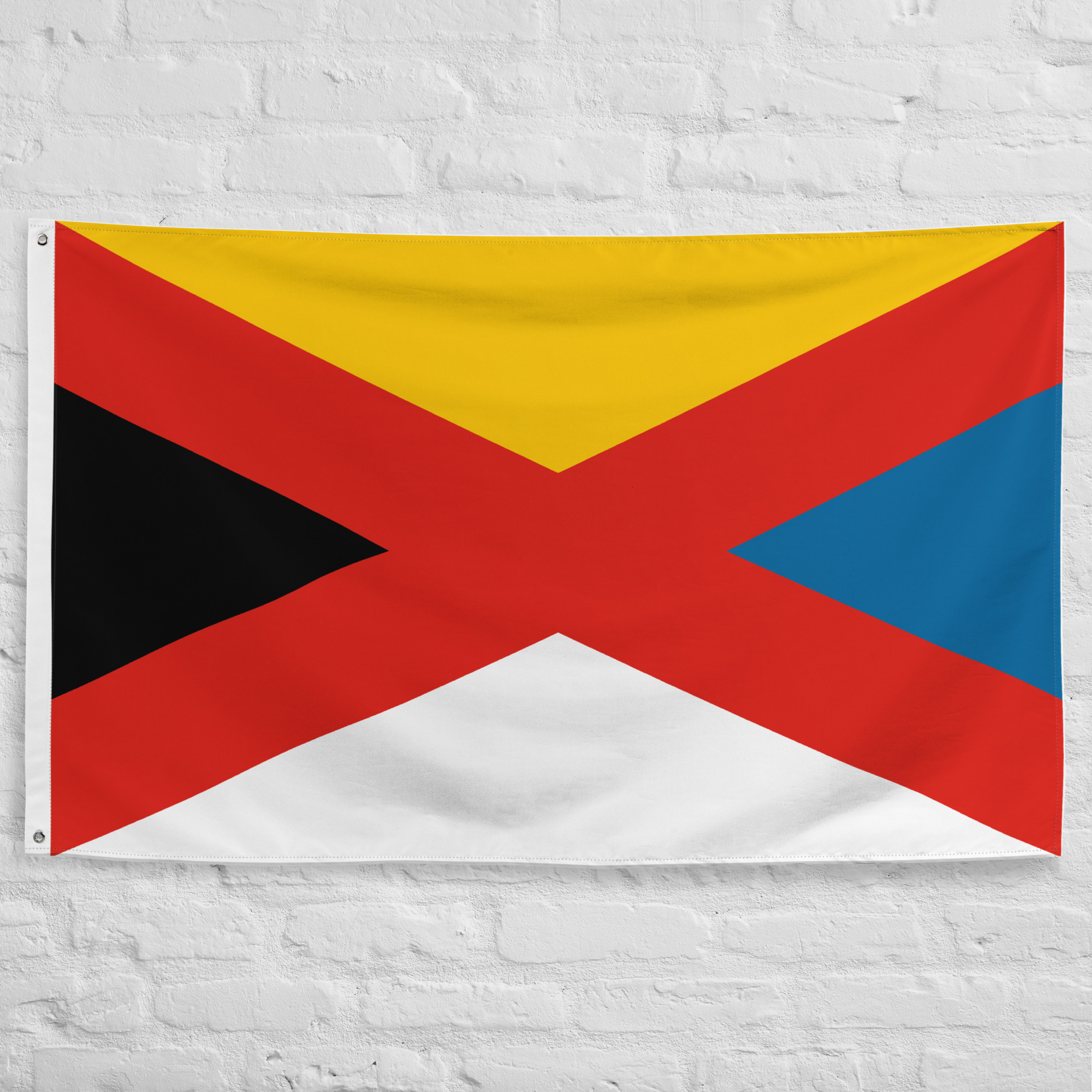
1915 Empire of China Flag Symbol of Yuan Shikai’s Imperial Ambition
The 1915 Empire of China Flag represents one of the most unusual and fascinating chapters in modern Chinese history. Adopted during Yuan Shikai’s attempt to transform the Republic of China into a new imperial state, this banner became the official flag of the Empire of China, also known as the Hongxian Empire. Featuring a striking geometric design with multiple colors representing unity among China’s peoples, the flag symbolizes a short-lived but historically significant effort to restore monarchy after the fall of the Qing Dynasty. Today, it remains a popular collectible among enthusiasts of Chinese history, political transitions, and historical flags.
The Fall of Imperial China
To understand the significance of the Yuan Shikai Flag, it is important to examine the events that preceded its creation. In 1911, the Xinhai Revolution brought an end to the Qing Dynasty, which had ruled China since 1644. The revolution established the Republic of China and ended more than two thousand years of imperial government.
Who Was Yuan Shikai?
Yuan Shikai was one of the most influential military and political leaders of his era. Having served under the Qing government, he became a central figure during the transition from empire to republic. As president of the Republic of China, Yuan wielded immense political power and sought to stabilize a nation facing significant internal challenges.
The Meaning Behind the 1915 Empire of China Flag
The Empire of China Flag represented the new imperial government proclaimed by Yuan Shikai in late 1915. The colorful design symbolized national unity and the idea of bringing together the diverse peoples of China under a single imperial authority.
The Creation of the Hongxian Empire
The Chinese Empire Banner became official when Yuan Shikai declared himself emperor and established the Hongxian Empire. The new regime sought to revive the traditions of imperial rule while presenting itself as a modern state capable of guiding China into the twentieth century.
A Controversial Restoration
Yuan’s decision to restore the monarchy proved highly controversial. Many political leaders, military commanders, intellectuals, and provincial governments opposed the move. They feared that imperial restoration would undermine the republican ideals established after the revolution.
The Symbolism of the Flag’s Design
The Hongxian Empire Flag differed significantly from earlier imperial banners. Its geometric pattern and vibrant colors reflected modern influences while still attempting to project authority and national unity. The design remains one of the most distinctive flags in modern Chinese history.
Resistance Across China
Opposition to the new empire quickly spread throughout the country. Several provinces declared resistance, and military leaders organized movements to defend the republic. These developments weakened Yuan Shikai’s position and made the survival of the empire increasingly unlikely.
The Collapse of the Empire
The Empire of China lasted only a few months. Faced with widespread opposition and growing instability, Yuan Shikai abandoned the imperial project in 1916. The monarchy was dissolved, and China officially returned to republican government.
Historical Importance of the Hongxian Empire
The brief existence of the Hongxian Empire had a lasting impact on Chinese politics. It demonstrated the difficulties of restoring imperial rule in a rapidly changing society and helped shape the future development of modern China.
Why Collectors Appreciate the 1915 Empire of China Flag
Collectors value the 1915 Empire of China Flag because it represents a unique political experiment rarely discussed outside historical circles. The flag serves as a reminder of a dramatic moment when China briefly attempted to reverse the revolutionary changes that had transformed the nation.
A Unique Piece of Chinese History
Unlike the flags of long-lasting dynasties or modern governments, this banner represents a state that existed for less than a year. Its rarity and historical significance make it especially appealing to collectors interested in unusual historical periods.
The Legacy of Yuan Shikai
The legacy of Yuan Shikai remains a subject of debate among historians. Some view him as a skilled statesman attempting to maintain order during a turbulent era, while others see his imperial ambitions as a major political mistake. Regardless of perspective, his actions shaped the course of twentieth-century Chinese history.
Educational and Historical Value
The Yuan Shikai Flag offers an excellent opportunity to explore the transition from empire to republic, the challenges of nation-building, and the political struggles that defined modern China. It provides valuable insight into one of the most dramatic periods in East Asian history.
Browse our collection of Historical Flags to discover more banners inspired by dynasties, empires, kingdoms, republics, and revolutionary movements from around the world.
Learn more about Yuan Shikai and the Hongxian Empire at Encyclopaedia Britannica.
Product Features
- 100% polyester construction
- Durable knitted fabric
- Printed on one side
- Blank reverse side
- 2 iron grommets for easy display
- Suitable for indoor and outdoor use




Reviews
There are no reviews yet.