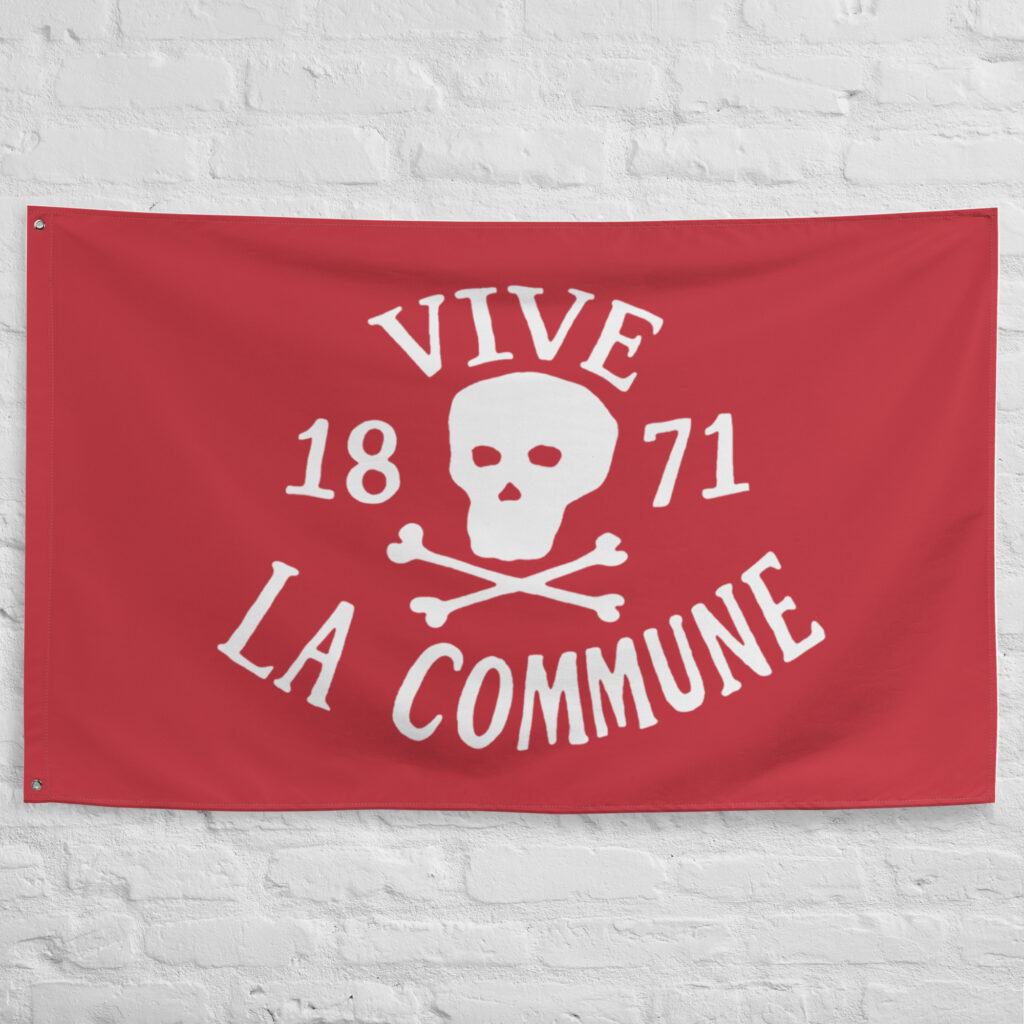
The Paris Commune Flag is one of the most recognizable symbols associated with the revolutionary events that shook France in 1871. Featuring the slogan “Vive La Commune,” the year 1871, and a striking skull-and-crossbones emblem, this commemorative flag pays tribute to one of the most influential revolutionary movements in modern European history.
More than 150 years after the uprising, the Paris Commune continues to fascinate historians, collectors, political scholars, and enthusiasts of historical flags. Today, the Paris Commune Flag serves as a reminder of a dramatic chapter in French history and remains a popular collectible among those interested in revolutionary movements and nineteenth-century Europe.
Browse our Paris Commune Flag:
What Was the Paris Commune?
The Paris Commune was a revolutionary government that controlled Paris from March 18 to May 28, 1871. It emerged during a period of political instability following France’s defeat in the Franco-Prussian War and the collapse of Napoleon III’s Second French Empire.
Many citizens of Paris believed the national government had failed them. Tensions between the authorities in Versailles and the people of Paris continued to grow until a popular uprising broke out. Revolutionary leaders established an independent administration known as the Paris Commune.
Although the Commune lasted only seventy-two days, it became one of the most famous political uprisings in modern history.
Why the Paris Commune Became Famous
The Paris Commune attracted international attention almost immediately. Newspapers throughout Europe reported on the events unfolding in Paris, while political leaders and intellectuals closely followed the revolutionary experiment.
A Capital City in Revolt
Unlike many uprisings that occurred in remote regions, the Paris Commune took place in one of the most important cities in Europe. Paris was a major center of politics, culture, and commerce, making the events impossible to ignore.
Revolutionary Ideas
The Commune introduced a variety of reforms that challenged traditional political structures. These policies generated admiration among supporters and criticism among opponents, helping ensure the Commune would remain a subject of historical debate for generations.
Global Influence
The legacy of the Commune extended far beyond France. Political movements throughout Europe and other parts of the world studied the events of 1871 and drew inspiration from the revolutionary government established in Paris.
The Meaning of “Vive La Commune”
The phrase “Vive La Commune” translates to “Long Live the Commune.” It became one of the most recognizable slogans associated with the movement and remains closely linked to its historical legacy.
A Symbol of Support
For supporters of the Commune, the slogan expressed loyalty to the revolutionary government and the ideals it represented.
A Symbol of Resistance
The phrase also reflected opposition to the forces that sought to suppress the movement and restore traditional authority.
A Historical Tribute
Today, the slogan is primarily used to commemorate the events of 1871 and remember the individuals who participated in the Commune.
Why Is the Year 1871 Displayed on the Flag?
The year 1871 marks the period during which the Paris Commune existed. Displaying the date on the flag immediately identifies the banner with one of the most important revolutionary movements in French history.
For historians and collectors, the date serves as a direct connection to the events that unfolded in Paris during the spring of that year.
The Symbolism of the Red Background
The red background is one of the most significant elements of the design. Throughout the nineteenth century, red became associated with revolutionary movements and political change across Europe.
Revolution
The color red symbolized opposition to existing political systems and the desire for reform.
Sacrifice
Many people viewed the color as a representation of the sacrifices made during struggles for political and social change.
Unity
Red banners often represented solidarity among individuals seeking a common political objective.
The Paris Commune played a major role in strengthening the association between the color red and revolutionary movements.
The Meaning of the Skull and Crossbones
The skull-and-crossbones is one of the most distinctive features of this commemorative Paris Commune Flag.
Was It an Official Symbol?
No. Historical records generally associate the Paris Commune with plain red flags rather than skull imagery.
Why Is It Used on Modern Commemorative Flags?
The skull-and-crossbones is often used to emphasize the dramatic and violent nature of the events of 1871. It can symbolize sacrifice, danger, resistance, and the memory of those who lost their lives during the conflict.
A Striking Design Choice
Combined with the slogan “Vive La Commune” and the date 1871, the skull-and-crossbones creates a visually powerful tribute to one of the most famous uprisings in modern history.
The Fall of the Paris Commune
The Paris Commune came to an end during a period known as the Bloody Week. Beginning on May 21, 1871, government forces entered Paris and launched a large-scale military operation to retake the city.
Street fighting occurred throughout Paris as Communards defended barricades and strongpoints. After several days of intense combat, government forces regained control and the Commune was defeated.
Although the revolutionary government lasted only a short time, its legacy endured and continued to influence political thought long after its collapse.
Why Collectors Display the Paris Commune Flag
The Paris Commune Flag remains popular among collectors for a variety of reasons.
Historical Significance
The flag commemorates one of the most important revolutionary events of the nineteenth century.
Educational Value
Teachers, students, and historians often use historical flags as visual tools for understanding important historical events.
Unique Revolutionary Heritage
Few historical flags are as closely associated with revolutionary politics and social change as the Paris Commune Flag.
Distinctive Appearance
The combination of the red field, skull-and-crossbones emblem, “Vive La Commune” slogan, and 1871 date creates a memorable display piece for collectors.
Related Historical Flags
Frequently Asked Questions
What was the Paris Commune?
The Paris Commune was a revolutionary government that controlled Paris from March to May 1871.
What does “Vive La Commune” mean?
The phrase translates to “Long Live the Commune” and serves as a tribute to the revolutionary movement.
Why is the flag red?
The red color reflects the revolutionary traditions historically associated with the Paris Commune and many nineteenth-century political movements.
Was the skull-and-crossbones used by the original Commune?
No. The skull-and-crossbones is a modern commemorative symbol found on some contemporary Paris Commune flag designs.
Why do people collect Paris Commune Flags?
Collectors value the flag for its historical significance, revolutionary symbolism, educational value, and distinctive design.
Conclusion
The Paris Commune Flag is a powerful tribute to one of the most influential revolutionary movements in modern French history. Featuring the slogan “Vive La Commune,” the date 1871, and dramatic commemorative imagery, the flag captures the spirit of a movement that continues to fascinate historians and collectors around the world.
Whether displayed as part of a historical collection or appreciated for its connection to French revolutionary history, the Paris Commune Flag remains a meaningful reminder of a remarkable chapter in the history of Paris.