
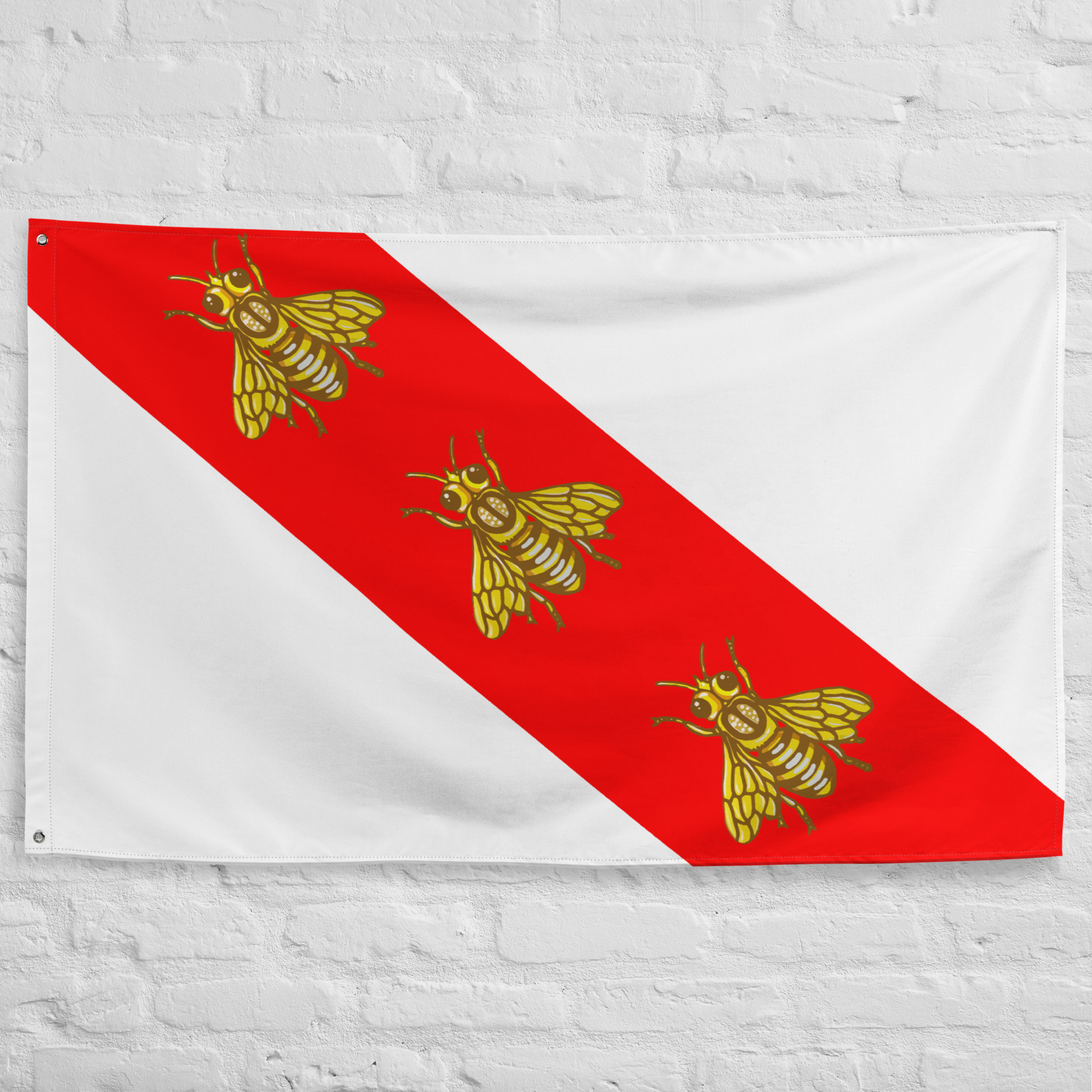
Elba Flag
The Elba Flag is one of the most unique and recognizable banners associated with Napoleon Bonaparte. Featuring a bold red diagonal band adorned with three golden bees, this historic design served as the flag of the island of Elba during Napoleon’s brief rule following his first abdication in 1814.
Although Napoleon’s stay on Elba lasted less than a year, the island became the center of one of the most fascinating chapters in European history. The flag created for this small Mediterranean state remains a symbol of the Napoleonic era and the remarkable career of one of history’s most famous military leaders.
Today, the Elba Flag is highly sought after by collectors of Napoleonic, military, and European historical memorabilia.
The Exile of Napoleon
The Napoleon Elba Flag is directly connected to the events that followed Napoleon’s defeat in 1814. After years of warfare across Europe, the French emperor abdicated and was granted sovereignty over the island of Elba, located off the coast of Italy.
Rather than being imprisoned, Napoleon was permitted to govern the island as its ruler. During this period, he established a small administration, introduced reforms, and adopted a distinctive flag that reflected both his authority and his imperial legacy.
The result was one of the most unusual state flags in European history.
The Meaning of the Golden Bees
At the center of the Imperial Elba Flag are three golden bees displayed along the red diagonal stripe. The bee was one of Napoleon’s favorite imperial symbols and appeared throughout the French Empire on official regalia, banners, and ceremonial items.
Napoleon selected the bee as a symbol of continuity, hard work, and authority. It also connected his empire to older French royal traditions while creating a distinctive identity separate from previous dynasties.
The golden bees remain one of the most recognizable symbols of the Napoleonic era.
A Unique Napoleonic Banner
The Napoleonic Flag of Elba stands apart from other flags of the period due to its unusual design. The red diagonal band cuts across a white field, creating a visually striking appearance that immediately distinguishes it from traditional European national flags.
The combination of the bold red stripe and golden bees reflects Napoleon’s personal influence over the design and reinforces its connection to his imperial image.
As a result, the Elba Flag remains instantly recognizable to students of Napoleonic history.
Napoleon’s Return to Power
The Elba Banner is associated with a brief but dramatic period between Napoleon’s abdication and his famous return to France. In 1815, he escaped from Elba and returned to the French mainland, beginning the period known as the Hundred Days.
His return shocked Europe and culminated in the Battle of Waterloo, one of the most significant military engagements in modern history. Following his final defeat, Napoleon was exiled again, this time to the remote island of Saint Helena.
Because of these events, the Elba Flag occupies a unique place within Napoleonic history.
Elba Flag for Collectors
The Elba Flag is an excellent addition to collections focused on Napoleon Bonaparte, the Napoleonic Wars, French history, military history, and European historical flags. Its distinctive design and historical significance make it a standout display piece.
Collectors often display the banner alongside French Empire flags, military standards, Napoleonic memorabilia, and other symbols associated with nineteenth-century Europe.
Its unusual story and striking appearance make it one of the most fascinating banners of the Napoleonic era.
The Legacy of Elba
Although Napoleon ruled Elba for only a short period, the island remains forever linked to one of history’s most famous leaders. The Elba Flag serves as a reminder of this remarkable chapter between the fall of the French Empire and Napoleon’s dramatic final return to power.
For historians and collectors alike, the flag represents a unique moment when one of Europe’s greatest emperors governed a small Mediterranean island while planning his next move.
Whether displayed for historical appreciation, collecting, educational purposes, or Napoleonic decor, the Elba Flag remains one of the most distinctive banners of the nineteenth century.
Browse Our Collection
Browse our collection of Historical Flags and European Flags to discover more banners from the Napoleonic era and European history.
For additional information about Napoleon’s exile on Elba, visit the history of Elba.
Product Features
- 100% polyester construction
- Durable knitted fabric
- Printed on one side
- Blank reverse side
- 2 iron grommets for easy display
- Suitable for indoor and outdoor use



Reviews
There are no reviews yet.