
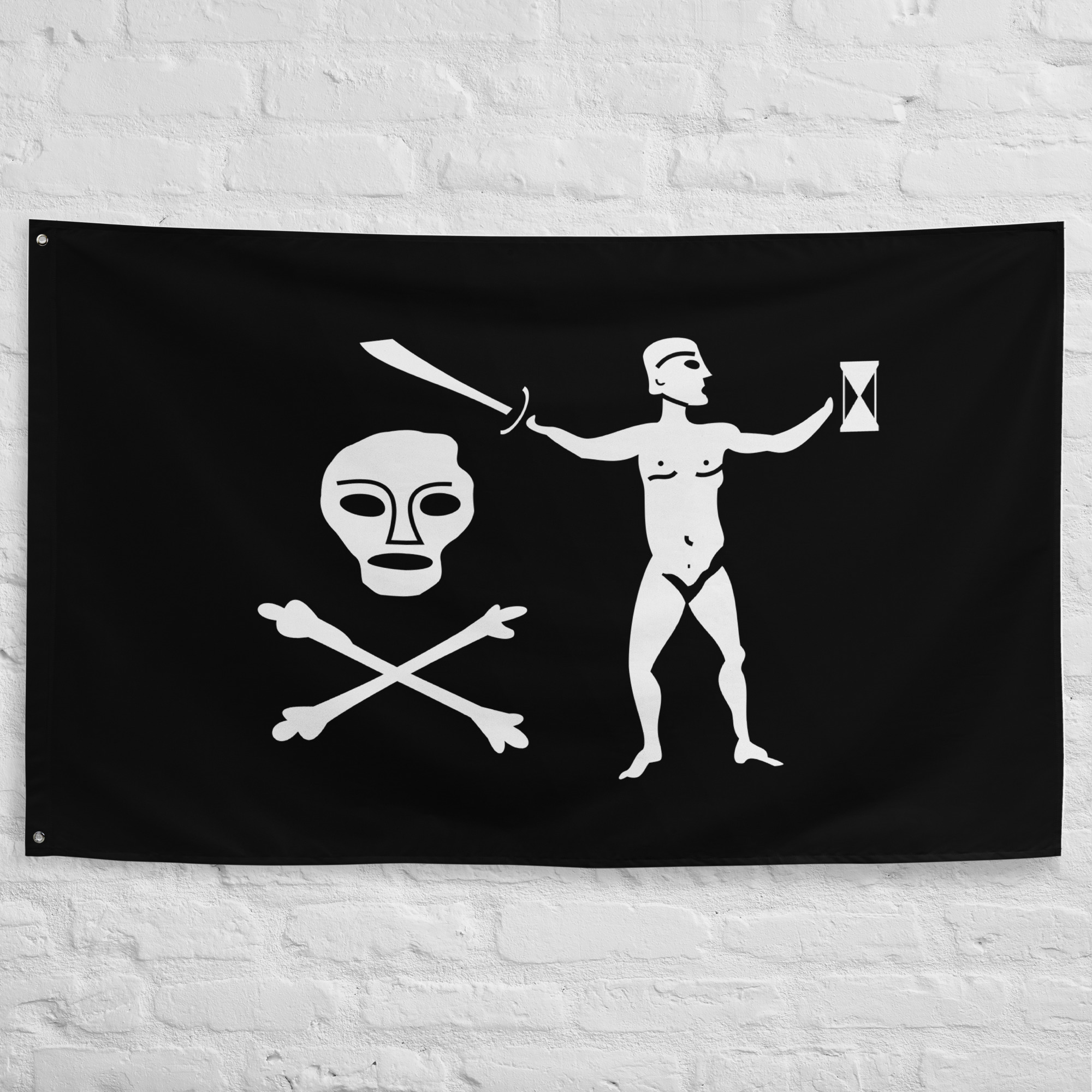
Captain Dulaien Pirate Flag Symbol of Pirate Power and Maritime Legend
The Captain Dulaien Pirate Flag is a striking example of the fearsome banners associated with the Golden Age of Piracy. Featuring a skeletal inspired figure armed with a sword, an hourglass, and a skull above crossed bones, this dramatic design embodies the themes of mortality, danger, and defiance that defined pirate culture. Like many historic Jolly Rogers, the flag was intended to intimidate merchant crews and encourage surrender before a battle began. Today, it remains a fascinating symbol of maritime history and pirate legend.
The Golden Age of Piracy
The era commonly known as the Golden Age of Piracy lasted from the late seventeenth century into the early eighteenth century. During this period, pirates operated across the Caribbean, Atlantic Ocean, Indian Ocean, and coastal waters of the Americas. Merchant ships carrying valuable cargo became frequent targets, creating opportunities for ambitious sailors seeking wealth and adventure.
The Meaning Behind the Captain Dulaien Pirate Flag
The Captain Dulaien Flag contains several classic pirate symbols designed to communicate a clear message. The sword represents force and readiness for battle, while the skull and crossed bones symbolize death. Together, these images created a powerful warning that resistance could carry severe consequences.
The Symbolism of the Hourglass
One of the most significant elements on the Jolly Roger Flag is the hourglass. Pirate crews often used this symbol to remind their targets that time was running out. Merchant captains were encouraged to surrender quickly rather than risk combat. The hourglass became one of the most effective visual warnings used by pirates during the age of sail.
The Sword as a Symbol of Strength
The raised sword featured on the Pirate Flag represents the willingness of pirates to fight for treasure, survival, and reputation. Successful pirate captains depended heavily on their ability to maintain a fearsome image. The display of a weapon reinforced the idea that pirate crews were prepared to use force when necessary.
The Skull and Crossed Bones Tradition
The skull and crossed bones have become the most famous symbols associated with piracy. Long before modern popular culture embraced pirate imagery, sailors recognized these symbols as warnings of danger. On the Historic Pirate Banner, the skull reminds viewers of the risks faced by anyone who encountered pirates on the open sea.
Pirate Flags as Psychological Weapons
Pirate captains understood the value of fear. A recognizable flag could often achieve what cannons could not. By displaying frightening imagery, pirates encouraged merchant crews to surrender peacefully, reducing the need for costly and dangerous battles. The success of many pirate operations depended as much on reputation as on military strength.
Life Aboard a Pirate Ship
Despite their fearsome image, pirate crews often operated according to agreed rules and codes. Many captains were elected, and crew members shared captured treasure according to established systems. These practices helped maintain order and cooperation during long voyages across dangerous waters.
The Caribbean and Pirate Activity
The Caribbean became one of the most active regions for piracy due to its busy shipping routes and numerous islands. Pirates could find safe harbors, monitor merchant traffic, and launch attacks against vessels carrying valuable goods. Many famous pirate flags became associated with this region and its maritime history.
Why Collectors Appreciate the Captain Dulaien Pirate Flag
Collectors value the Captain Dulaien Pirate Flag because of its dramatic design and classic pirate symbolism. The combination of the sword, hourglass, skull, and bones creates a visually powerful banner that immediately evokes the legends of the Golden Age of Piracy. It is especially popular among enthusiasts of maritime history and naval heritage.
The Enduring Legacy of Pirate Flags
The influence of pirate banners extends far beyond their original historical purpose. Today, pirate imagery appears in films, books, museums, festivals, and historical collections throughout the world. The Captain Dulaien Flag continues to capture the imagination of those fascinated by the adventures, dangers, and legends of life at sea.
Educational Value and Historical Interest
The Jolly Roger Flag provides an excellent opportunity to explore maritime trade, naval warfare, and pirate culture during the seventeenth and eighteenth centuries. It serves as a reminder of how symbolism and reputation played important roles in the history of piracy and seafaring.
Browse our collection of Historical Flags to discover more banners inspired by famous pirates, naval powers, kingdoms, and legendary historical figures.
Learn more about the history of piracy through Encyclopaedia Britannica: History of Piracy.
Product Features
- 100% polyester construction
- Durable knitted fabric
- Printed on one side
- Blank reverse side
- 2 iron grommets for easy display
- Suitable for indoor and outdoor use


Reviews
There are no reviews yet.